Java is Not Dead, It’s Evolving: The Top 10 Libraries and Frameworks for Building APIs in 2026
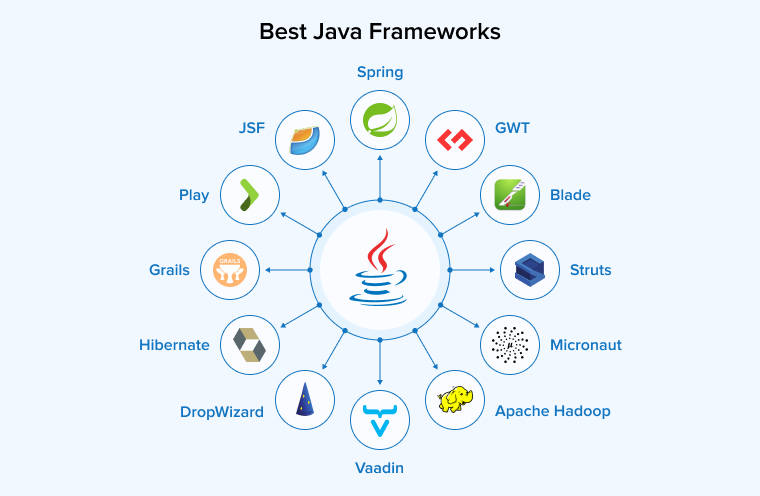
Java is Not Dead, It’s Evolving: The Top 10 Libraries and Frameworks for Building APIs in 2026
Welcome back to Code With Botina. If you have ever had to build a Java backend for a university project, you have probably faced endless configurations, giant XML files, and brutal memory consumption. It is completely normal to end up exhausted, thinking that languages like Node.js or Go are the only way out.
But the reality of the tech industry is completely different. Java remains the undisputed king of enterprise architectures, and its ecosystem has evolved incredibly. Today, we are going to explore the top 10 most used tools to create APIs in Java, what kind of projects they actually shine in, and what a basic endpoint looks like in each of them.
Forget about spaghetti code; it is time to talk about modern architecture.
1. Spring Boot (The Undisputed King)
If there is one standard in the industry, it is Spring Boot. It was born to eliminate the configuration nightmare of the old Spring Framework. It comes with "batteries included": security, data access, metrics, and embedded servers.
- Best for: Complex microservice architectures, enterprise monolithic applications, and projects where you need a massive ecosystem with integrations for absolutely everything (databases, message queues, cloud).
- Endpoint Example:
@RestController
@RequestMapping("/api")
public class HelloController {

    @GetMapping("/greeting")
    public String greet() {
        return "Hello from Spring Boot!";
    }
}
2. Quarkus (Supersonic Subatomic Java)
Created by Red Hat, Quarkus is Java's answer to the Edge Computing and Serverless era. It uses GraalVM to compile your Java code into a native binary. The result? It boots up in milliseconds and consumes a fraction of the RAM that Spring uses.
- Best for: Serverless environments (like AWS Lambda), massive Kubernetes deployments, and cloud-native architectures where resource consumption costs real money.
- Endpoint Example:
@Path("/api/greeting")
public class HelloResource {

    @GET
    @Produces(MediaType.TEXT_PLAIN)
    public String greet() {
        return "Hello from Quarkus!";
    }
}
3. Micronaut
Very similar to Quarkus in its philosophy. Micronaut is designed from the ground up for microservices. Unlike Spring (which uses runtime reflection and slows down startup times), Micronaut does all its dependency injection magic at compile time.
- Best for: Lightweight microservices, Serverless applications, and Internet of Things (IoT) projects where hardware has limited memory.
- Endpoint Example:
@Controller("/api")
public class HelloController {

    @Get(uri="/greeting", produces="text/plain")
    public String greet() {
        return "Hello from Micronaut!";
    }
}
4. Javalin (Express.js-style Simplicity)
If you come from the JavaScript/Node.js world and love the simplicity of Express.js, you are going to love Javalin. It doesn't use magic annotations (@). It is a purely programmatic framework, incredibly lightweight, and written in Kotlin (but 100% interoperable with Java).
- Best for: Fast projects, prototypes (MVPs), simple REST APIs, and developers who are learning and don't want to deal with the black magic of heavy frameworks.
- Endpoint Example:
import io.javalin.Javalin;

public class App {
    public static void main(String[] args) {
        Javalin app = Javalin.create().start(8080);
        app.get("/api/greeting", ctx -> ctx.result("Hello from Javalin!"));
    }
}
5. Eclipse Vert.x (The Reactive Beast)
Vert.x is not a traditional framework; it is a toolkit for building reactive applications on the JVM. It uses an "Event Loop" (just like Node.js), meaning it can handle tens of thousands of concurrent connections using very few CPU threads.
- Best for: Real-time applications (chats, live financial dashboards with WebSockets), video streaming, and systems with extremely high network loads.
- Endpoint Example:
import io.vertx.core.Vertx;

public class App {
    public static void main(String[] args) {
        Vertx vertx = Vertx.vertx();
        vertx.createHttpServer().requestHandler(req -> {
            if (req.uri().equals("/api/greeting")) {
                req.response().end("Hello from Vert.x!");
            }
        }).listen(8080);
    }
}
6. Dropwizard
Dropwizard was one of the pioneers in packaging a Java application with an embedded web server (Jetty) into a single .jar file. It is highly "opinionated", meaning it forces you to use the libraries they consider the best (Jersey for REST, Jackson for JSON, Metrics for monitoring).
- Best for: Production-grade RESTful services where stability is paramount and you need operational metrics from minute zero.
- Endpoint Example:
@Path("/api/greeting")
@Produces(MediaType.APPLICATION_JSON)
public class HelloResource {

    @GET
    public String greet() {
        return "{\"message\": \"Hello from Dropwizard!\"}";
    }
}
7. Helidon (Oracle’s Contender)
Helidon is a collection of libraries for writing microservices, backed by Oracle. It comes in two flavors: Helidon MP (for those who like classic enterprise standards) and Helidon SE (its reactive, ultra-lightweight version that doesn't use annotations).
- Best for: Migrating legacy applications to microservices within the Oracle ecosystem or building high-performance reactive APIs.
- Endpoint Example (Helidon SE):
import io.helidon.webserver.Routing;
import io.helidon.webserver.WebServer;

public class App {
    public static void main(String[] args) {
        Routing routing = Routing.builder()
                .get("/api/greeting", (req, res) -> res.send("Hello from Helidon!"))
                .build();
        WebServer.create(routing).start();
    }
}
8. Spark Java (The Minimalist)
Note: Not to be confused with Apache Spark (which is for Big Data). Spark Java is another micro-framework inspired by Sinatra (Ruby). It was created to make building web applications in Java as easy as possible with minimal effort and zero XML configurations.
- Best for: Students, quick proofs of concept (PoCs), and extremely small services that don't require a complex architecture.
- Endpoint Example:
import static spark.Spark.*;

public class App {
    public static void main(String[] args) {
        get("/api/greeting", (req, res) -> "Hello from Spark Java!");
    }
}
9. Play Framework
Play was designed to solve the performance deficiencies of traditional web frameworks. It is built on Akka (a very powerful concurrency tool) and is "Stateless," making it perfect for horizontal scaling.
- Best for: Full-Stack web applications (with integrated frontend), high-traffic portals, and architectures requiring heavy asynchronous processing.
- Endpoint Example:
import play.mvc.*;

public class HelloController extends Controller {
    public Result greet() {
        return ok("Hello from Play Framework!");
    }
}
10. Jersey (The JAX-RS Standard)
Jersey is not a full framework, but a library that implements the official Java specification for RESTful APIs (JAX-RS). Many tools (like Dropwizard or Helidon) use it under the hood.
- Best for: Developers who need to strictly adhere to Jakarta EE (formerly Java EE) standards and traditional corporate environments.
- Endpoint Example:
@Path("/api")
public class HelloResource {

    @GET
    @Path("/greeting")
    @Produces(MediaType.TEXT_PLAIN)
    public String greet() {
        return "Hello from Jersey!";
    }
}
Conclusion
Learning to code shouldn't be about suffering through the configuration of obsolete tools; it's about choosing the right piece of technology to solve a specific problem.
If you need the industry heavyweight, go for Spring Boot. If you want to modernize and save money on cloud hosting, learn Quarkus or Micronaut. And if you just want to test an idea this weekend without stressing out, give Javalin a try.
Which of these have you used in your projects, or which one are you forced to use at university? Let's talk about code and architecture in the comments!
Stay tuned to Code With Botina to master real-world backend development and leave bad practices behind.
Loading reactions...
Comments (0)
Loading session...
No comments yet. Be the first to comment.