The Digital Glue of 2026: What is an API, Protocols, and Why They Rule the World
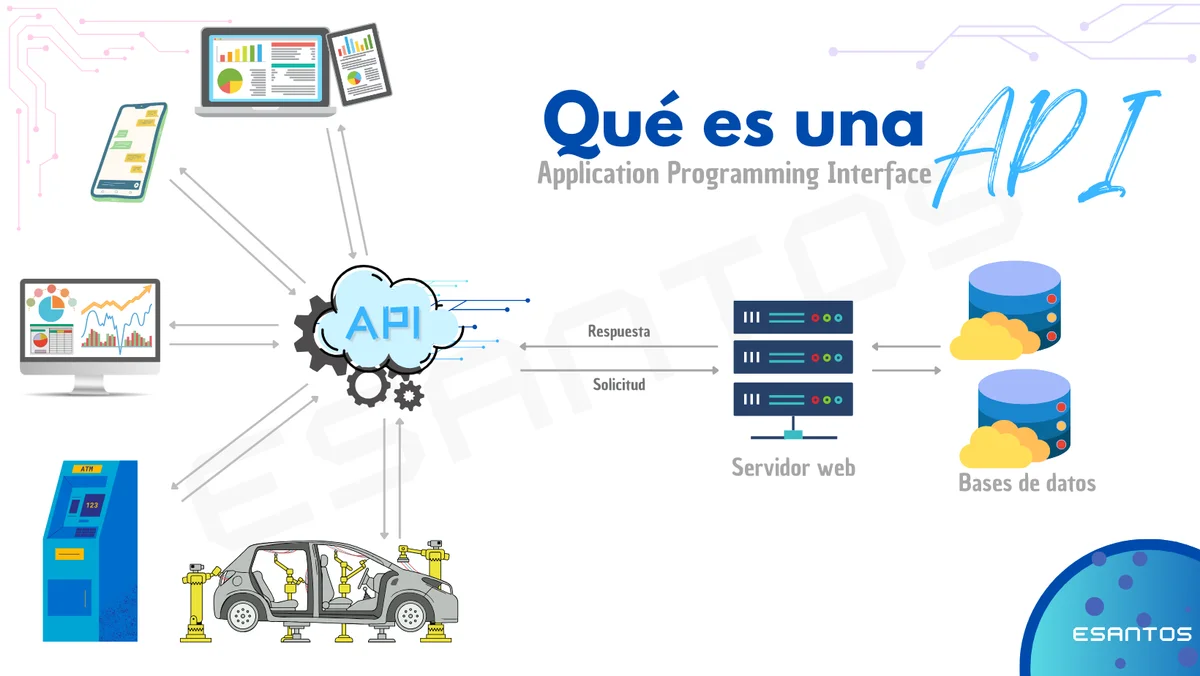
The Digital Glue of 2026: What is an API, Protocols, and Why They Rule the World
Welcome back to Code With Botina. If you've been following our posts about client-server architecture, you already know that the internet is a massive conversation between different machines. But how exactly do these machines understand each other? The answer is simple: APIs.
Today, we are going to break down what an API is, the types that exist, how they communicate, and why in 2026, you simply cannot build modern software without them.
What is an API?
API stands for Application Programming Interface.
Imagine you are sitting at a restaurant. You (the client) want to order food from the kitchen (the server). However, you can't just walk into the kitchen and cook it yourself. You need a waiter. You tell the waiter your order, the waiter takes it to the kitchen, and then brings your food back to your table.
In the digital world, the API is the waiter. It is a set of rules and mechanisms that allows one software application to talk to another.
Real-world example: When you use an app like Uber, the app doesn't have its own mapping system. Instead, it uses an API to talk to Google Maps, asking: "Hey, show the map for these coordinates," and Google Maps returns the image to your screen.
Types of APIs (By Access)
Not all APIs are open to everyone. Depending on who can use them, they are divided into three main categories:
- Private (Internal) APIs: Used exclusively within a company to connect their own internal microservices. For example, a company's HR system talking to their payroll system.
- Partner APIs: Shared only with specific business partners. You need a special license or agreement to access them.
- Public (Open) APIs: Available for any developer to use. Think of the X (Twitter) API, weather APIs, or the Stripe API for processing payments.
How do they communicate? (Protocols and Architectures)
For two systems to talk, they need to agree on how to format the messages. Here are the most dominant architectures in 2026:
- REST (Representational State Transfer): The undisputed king of the web. It uses standard HTTP requests (GET, POST, PUT, DELETE) to manage data. It’s lightweight, stateless, and mostly uses JSON to send data.
- GraphQL: Created by Facebook. Unlike REST, where the server decides what data to send, GraphQL allows the client to ask for exactly what it needs—nothing more, nothing less. It solves the problem of downloading too much unnecessary data.
- gRPC: Developed by Google. It is lightning-fast and uses a format called Protocol Buffers instead of JSON. It is heavily used in 2026 for internal microservices communication where speed is critical.
- WebSockets: We talked about this before! While REST is a one-time request, WebSockets keep a permanent two-way connection open, perfect for live chats or real-time trading dashboards.
Why are APIs so critical in 2026?
You might wonder why we are talking about APIs right now. In 2026, the tech landscape has evolved, and APIs are the center of it all:
- The AI Integration Boom: Every application now wants to include AI features. Developers aren't training massive language models from scratch; they simply connect to the APIs of models like Gemini or OpenAI to instantly add intelligence to their apps.
- The Microservices Standard: Monolithic applications (where everything is a single block of code) are a thing of the past. Today, an app is a puzzle of 50 small services (authentication, database, UI) talking to each other constantly via APIs.
- The "Headless" Web: Frontends (React, Vue) and Backends (Node, Python) are completely separated now. The only bridge between a beautiful user interface and the database is a robust API.
Conclusion
APIs are the invisible threads holding the modern digital world together. Whether you are building a simple blog or a complex AI-driven platform, mastering API integration and design is a mandatory skill for any developer today.
What is your favorite API to play around with? Let's discuss it in the comments!
Subscribe to Code With Botina for more deep dives into software architecture and networking!
Loading reactions...
Comments (0)
Loading session...
No comments yet. Be the first to comment.